Ghana’s Digital Economy: Opportunities and Challenges for the Future
Ghana's Digital Economy: Opportunities and Challenges for the Future

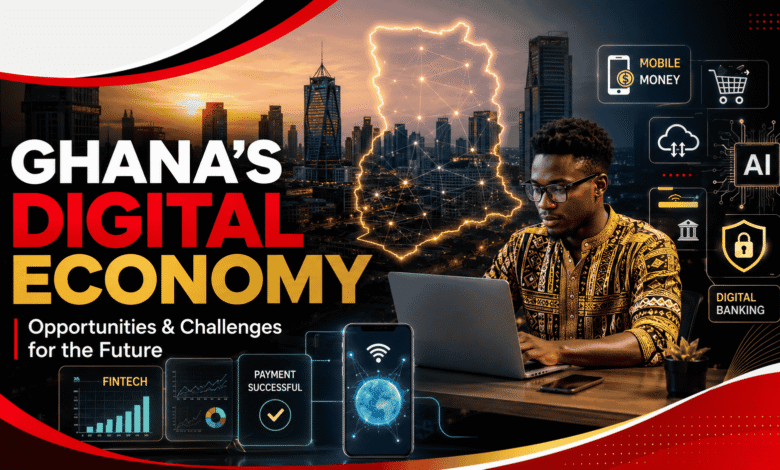
Ghana’s Digital Economy: Opportunities and Challenges for the Future.
Ghana is rapidly embracing digital technology, transforming the way people work, communicate, shop and access essential services. From Mobile Money and online banking to e-commerce, digital education and government services, technology has become a major driver of economic growth.
The country’s digital economy continues to expand as businesses invest in innovation and more citizens gain access to smartphones and internet services. While this transformation presents enormous opportunities, it also comes with challenges that require coordinated efforts from government, businesses and individuals.
READ MORE: Ghana Steps Up Flood Response After Devastating June Floods
What Is a Digital Economy?
A digital economy is an economy that relies on digital technologies to support business activities, communication and financial transactions.
Examples include:
Mobile Money services
Online shopping
Digital banking
Remote work
Online education
Digital health services
Electronic government services (e-government)
These technologies improve efficiency, reduce costs and make services more accessible.
Key Drivers of Ghana’s Digital Economy
1. Mobile Money
Mobile Money has revolutionized financial services by allowing millions of Ghanaians to send money, pay bills and make purchases using their mobile phones.
2. Internet Expansion
Improved internet infrastructure has enabled more people to access digital services for education, entertainment and business.
3. Growing Startup Ecosystem
Young entrepreneurs are developing innovative solutions in agriculture, health, education, logistics and financial technology.
Technology hubs across the country continue to support innovation and business development.
4. Digital Government Services
Many public services are gradually becoming available online, making it easier for citizens to access information and complete official processes.
Benefits of the Digital Economy
Job Creation
Technology has created employment opportunities in software development, digital marketing, graphic design, cybersecurity, online journalism and e-commerce.
Business Growth
Small businesses can now reach customers nationwide through websites and social media.
Digital payments have also simplified business transactions.
Improved Financial Inclusion
Digital financial services provide access to banking and payment solutions for people who previously had limited access to traditional financial institutions.
Better Access to Information
Students, researchers and professionals now have access to educational resources from around the world.
Challenges
Despite the progress, several challenges remain.
Cybersecurity Risks
As more activities move online, cybercrime and digital fraud continue to pose significant risks.
Digital Skills Gap
Some people still lack the knowledge required to use digital technologies effectively.
Internet Costs
Although internet access has improved, affordability remains a concern for some households and small businesses.
Rural Connectivity
Some rural communities continue to experience limited internet coverage.
The Way Forward
Experts believe Ghana can strengthen its digital economy by:
Expanding affordable internet access.
Investing in digital education.
Supporting technology startups.
Improving cybersecurity awareness.
Encouraging innovation and entrepreneurship.
These measures can help ensure that more people benefit from technological progress.
Ghana’s digital economy is creating exciting opportunities for businesses, entrepreneurs and consumers. By embracing innovation while addressing existing challenges, the country can continue building a more inclusive and competitive economy.
Technology will remain one of the key drivers of Ghana’s future development, making digital skills and innovation increasingly important for individuals and organisations alike.
FOLLOW US ON FACEBOOK