Ghana’s reparations talks have entered a more practical phase after President John Dramani Mahama used a London engagement this week to call for acknowledgement, apology and concrete steps towards justice, rather than treating the issue as a demand for a cheque alone. The development comes as the Financial Times reports that Ghana is negotiating with Germany, France and other Western countries over reparatory measures linked to the transatlantic slave trade.
In a statement published by Ghana’s Information Services Department on October 23, the President said Ghana wanted countries to move beyond recognition of historical injustice and work on initiatives that can support healing, reconciliation and international understanding. He described the position as one grounded in justice and practical cooperation, not simply financial compensation.
What Ghana has said in the latest engagement
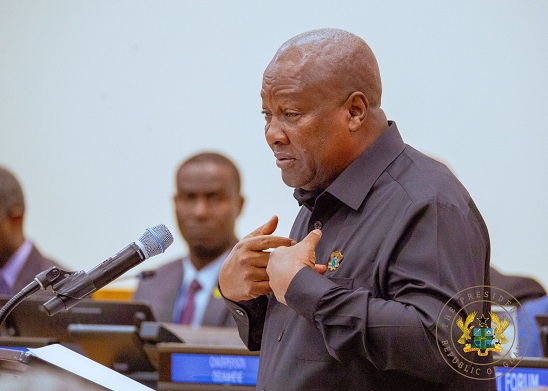
Mahama spoke at a Presidential Cross-Party Parliamentary Meeting in London on Thursday, October 22, according to the Information Services Department. His message was that reparatory justice should not be reduced to a single financial transaction. Ghana is calling for acknowledgement of the historical wrong, an apology, and steps that help address the continuing consequences of enslavement.
“We are not here seeking the taxpayers’ cheque book,” the President said, according to the official account. “We call for acknowledgement, apology and the next steps for justice, peace and international understanding.” The wording is significant because it frames the issue as a process with several forms of redress, rather than a negotiation limited to a fixed cash figure.
The same statement said Ghana was ready to work with the United Kingdom and other partners on practical initiatives involving restitution, the preservation of historical records and heritage, and educational programmes. Mahama also raised security cooperation, including intelligence sharing and capacity building, in the wider Ghana–UK relationship. The reparations remarks therefore formed part of a broader diplomatic engagement, but they should not be read as an announcement of a concluded reparations agreement.
Reports of talks with European countries
The Financial Times reported this week that Ghana is in discussions with Germany, France and other Western countries over reparations for the transatlantic slave trade. The report described Ghana’s priorities as extending beyond direct payments to include the return of cultural artefacts, debt relief and measures intended to support prosperity in the Global South.
Those details add context to Mahama’s public comments, but the available reporting does not provide a signed agreement, a timetable for negotiations, a final list of participating governments or an agreed financial package. It is therefore important to distinguish between ongoing diplomatic discussions and commitments that have already been formally adopted.
For Ghana, the distinction matters. A reparatory framework could involve several governments and institutions, each with different legal positions, historical records and domestic political constraints. The public statements indicate that dialogue is underway; they do not establish that every partner has accepted Ghana’s proposals or that a particular form of redress is guaranteed.
How the United Nations resolution changed the debate
Ghana’s campaign gained a major diplomatic milestone on March 25, 2026, when the United Nations General Assembly adopted a Ghana-led resolution describing the trafficking of enslaved Africans and racialised chattel enslavement as the gravest crime against humanity. The measure received 123 votes in favour. The United States, Israel and Argentina voted against it, while 52 countries abstained, according to published accounts of the vote.
The resolution is a political and moral statement by the General Assembly, not a court judgment or a binding order requiring each country to pay compensation. Its importance lies in the way it formally places the issue before the international community and calls for engagement on historical injustice and reparatory justice. The vote also exposed continuing disagreement over how states should describe historical crimes, whether they can be ranked, and what legal consequences—if any—should follow.
Supporters argue that the resolution gives African states and people of African descent a stronger platform for seeking truth, recognition and remedies. Governments that opposed or abstained have raised different objections, including concerns about legal precedent and the wording of the measure. Those disagreements mean that diplomatic work after the vote is likely to be more complex than securing a majority in the General Assembly.
Ghana’s plan goes beyond one declaration
After the UN vote, Ghana convened a high-level consultative conference in Accra in June to discuss how the resolution could be translated into action. The Information Services Department reported that Mahama announced three international panels: a Global Advisory Panel on Reparatory Justice, an Expert Panel on the Restitution of Cultural Artefacts, and a Global Legal Panel on Reparatory Justice.
The panels are intended to provide strategic guidance, support research and restitution work, and examine legal pathways consistent with international law and human dignity. They are not a substitute for negotiations between governments. Their value will depend on whether they produce practical recommendations, clear responsibilities and sustained cooperation rather than simply another round of statements.
Ghana has also linked the process to the return of cultural property. In June, the Foreign Affairs Minister said the Netherlands would return 2,000 artefacts to Ghana after cataloguing them. That announcement shows that restitution can produce specific outcomes, although the return of objects is different from reaching a comprehensive agreement on reparations for slavery and its continuing effects.
Why restitution and archives matter
Cultural restitution is one of the most visible parts of the debate because objects taken from African communities are often held in museums, universities or private collections abroad. Returning them can reconnect communities with their history and create opportunities for research, education and cultural tourism. The process, however, requires provenance records, agreement on ownership, conservation planning and arrangements for safe display or storage.
Ghana has also called for access to historical records and educational initiatives. Archives can help establish how people were captured, transported, sold and exploited, and can support descendants and researchers seeking to understand the scale and structure of the trade. Educational work can help ensure that recognition is not limited to diplomatic speeches but reaches schools, museums and public institutions.
These measures are not interchangeable with financial compensation. They address different dimensions of harm, and governments may disagree about which remedies are appropriate. Ghana’s latest statements indicate that the country wants a broad discussion that includes recognition, apology, restitution, historical preservation and development-related measures.
Debt relief and development: a wider economic argument
The reparations debate also intersects with contemporary economic inequality. The Financial Times report said Ghana’s discussions include debt relief and broader measures to improve prosperity in the Global South. Such proposals are part of a wider argument that the legacy of slavery and colonial extraction should be considered alongside present-day structures that affect development, access to finance and economic opportunity.
Debt relief is a particularly complex issue because it involves creditors, lending terms, fiscal policy and the financial stability of states. It is not the same as a direct reparations payment, and any proposal would need to specify which debts, institutions and conditions are involved. The available reports do not disclose a negotiated debt-relief package between Ghana and the countries named in the talks.
For Ghana, the policy challenge is to ensure that international discussions connect with domestic priorities such as education, skills, heritage preservation and productive investment. For partner governments, the challenge is to move from broad acknowledgement to measures that can be explained to their own publics and implemented through existing institutions or new agreements. Ghana’s wider public debate about development financing also includes domestic revenue, including the figures in Fly FM Ghana’s recent MIIF mineral royalties report; the issues are distinct, but both concern the resources available for long-term development.
Readers can follow related national reporting through the Fly FM Ghana News desk and the Business desk.
What could slow the process
Several issues remain unresolved. Governments may disagree about responsibility for acts committed centuries ago, the legal basis for compensation, the people or institutions that should receive remedies, and how to measure the consequences of the slave trade across generations. Some may support restitution or educational cooperation while rejecting financial compensation. Others may prefer bilateral projects to a wider international framework.
There is also a practical question of accountability. A credible process would need transparent goals, public reporting and a way to assess whether commitments are being fulfilled. If discussions produce only general declarations, communities may see little change. If they produce concrete steps, such as the return of documented artefacts, the opening of archives or sustained educational programmes, the results would be easier to evaluate.
Ghana’s leadership role brings both opportunity and responsibility. The country’s historic forts and castles, including Elmina and Cape Coast, are powerful sites of memory, but the campaign concerns Africans and people of African descent across many countries. A durable approach will require coordination with the African Union, Caribbean governments, diaspora organisations, historians, legal experts and affected communities.
What to watch next
The next indicators will be whether Ghana and its partners publish more detail about the scope of the talks, whether any government announces a formal commitment, and whether the international panels deliver recommendations with timelines and responsible institutions. Updates on artefact returns, archive access and educational programmes will also show whether the process is moving from political recognition to implementation.
At this stage, the confirmed development is the renewed diplomatic push and the President’s public call for acknowledgement, apology and practical justice. The reported negotiations with European countries are an important part of that story, but their terms remain undisclosed. Ghana’s reparations talks are therefore best understood as an evolving process—not a completed settlement.
Frequently asked questions
Is Ghana asking only for financial compensation?
No. The official account of Mahama’s October 22 remarks emphasised acknowledgement, apology and practical steps. Reporting on the talks also mentions restitution, debt relief and broader development measures.
Has Ghana reached a reparations agreement with Germany or France?
No agreement or final package has been publicly announced in the sources reviewed for this report. The Financial Times has reported discussions, while Ghana’s official statement describes the President’s call for continued engagement.
Does the UN resolution require countries to pay reparations?
The General Assembly resolution is not a binding court order. It is a diplomatic resolution that recognises the issue and calls for engagement; the details of any remedies would require further political, legal and institutional work.
Sources and further reading
- Ghana Information Services Department: Mahama advocates reparatory justice and stronger Ghana–UK cooperation (October 23, 2026)
- Financial Times: Ghana in talks with European nations for reparations, president says
- Information Services Department: Ghana’s three global panels on reparatory justice
- Information Services Department: Netherlands to return artefacts to Ghana
- The Guardian: UN vote on the transatlantic slave trade resolution
For more Ghana news and analysis, visit Fly FM Ghana.