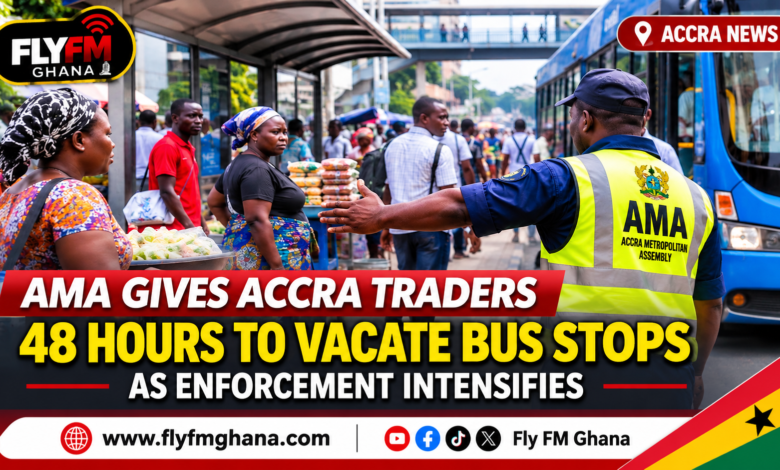
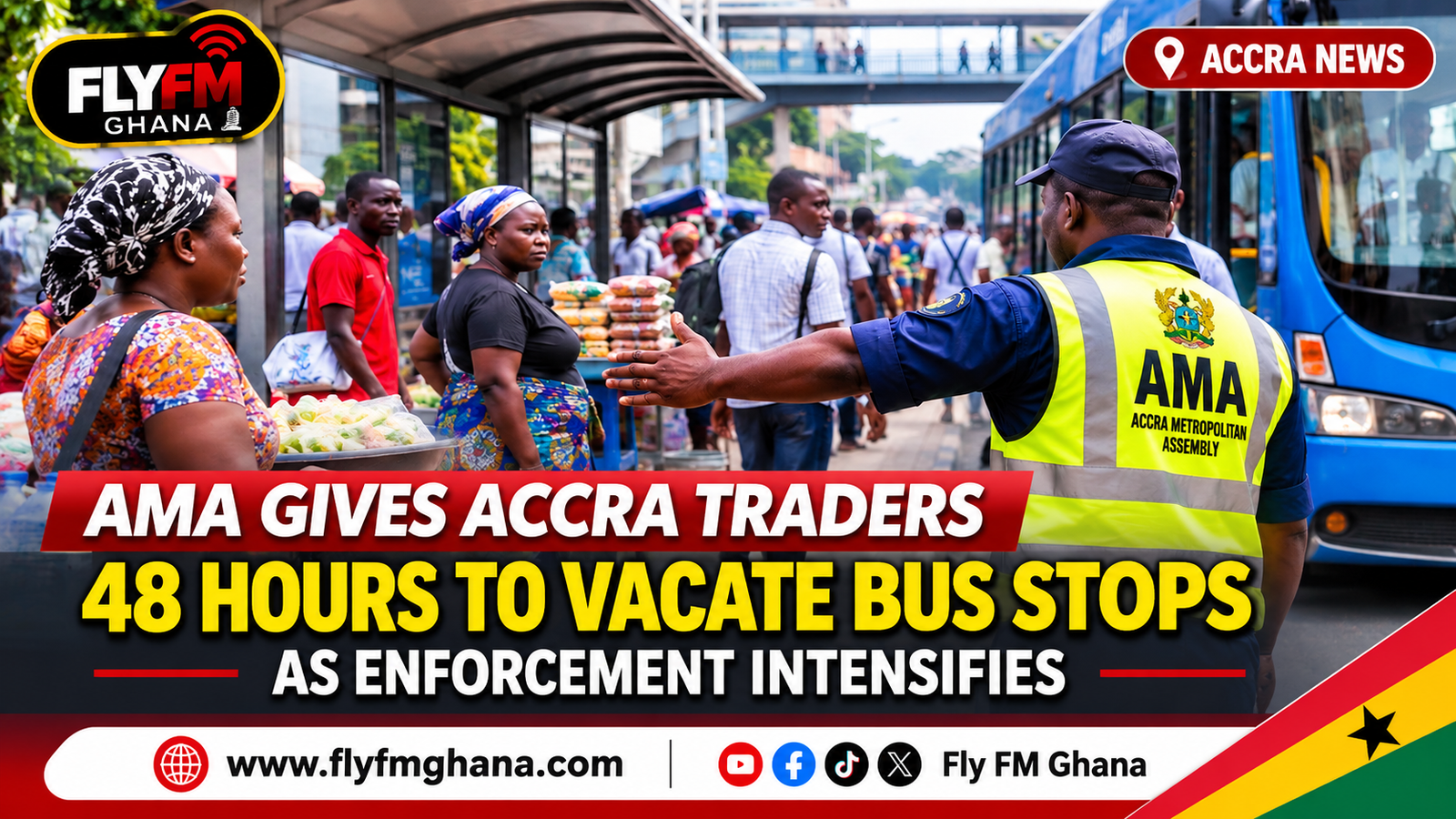
AMA Gives Accra Traders 48 Hours to Vacate Bus Stops as Enforcement Intensifies
The Accra Metropolitan Assembly (AMA) has given traders occupying unauthorised bus stops across the capital 48 hours to stop trading and vacate the affected locations.
The directive forms part of an enforcement exercise intended to restore order on public roads and make designated stopping points accessible to commercial drivers and commuters.
The announcement, reported on November 5, 2026, follows concerns from commercial transport operators about the continued occupation of bus stops by hawkers and traders. According to the Assembly, the situation obstructs vehicles, restricts pedestrian movement and contributes to congestion in busy parts of Accra.
ama.gov.gh+1
Why the AMA is targeting bus stops
Bus stops are designed to provide safe locations for public transport vehicles to pick up and drop off passengers. When traders occupy these spaces, drivers may be forced to stop elsewhere, sometimes in locations that create additional traffic hazards.
The AMA says the obstruction can force passengers to board or leave vehicles at unsafe points. This increases the risk of accidents, particularly where pedestrians must move between stationary vehicles and passing traffic.
The Assembly has already undertaken enforcement measures at locations including the Kwame Nkrumah Interchange, Achimota and parts of the Central Business District.
What happens if traders ignore the directive?
The AMA has warned that it will intensify enforcement against people who disregard the 48-hour instruction. Traders have also been cautioned against returning to locations after they have been cleared.
The Assembly says reoccupation could attract further action under its by-laws, including prosecution. The warning signals that the exercise is not intended to be a temporary clearance followed by a return to the same situation.
The effect on commuters and drivers
For commuters, accessible bus stops can make public transport journeys safer and more predictable. Passengers should be able to identify where vehicles are expected to stop without having to walk into traffic or compete for space with roadside traders.
Commercial drivers also need sufficient room to stop, load passengers and rejoin traffic safely. However, the enforcement exercise will need consistent implementation if it is to produce lasting improvements.
The challenge of balancing livelihoods and public safety
Street trading provides income for many households, and clearing traders from busy locations may affect people who depend on daily sales. This makes it important for city authorities to communicate clearly, enforce rules consistently and consider appropriate spaces where trading can take place without obstructing transport infrastructure.
The issue is therefore wider than removing stalls from bus stops. It involves urban planning, livelihoods, public safety and the management of shared public spaces.
What residents should expect
Residents and commuters should expect enforcement activity at affected locations as the AMA implements its directive. Drivers, traders and pedestrians are being urged to cooperate with the exercise.
The long-term success of the operation will depend on whether cleared spaces remain accessible and whether alternative arrangements prevent traders from returning to the same locations.
Accra’s transport system needs bus stops that serve their intended purpose. Keeping them clear can improve passenger safety, but sustained public education and fair enforcement will be essential to making the change last.
Frequently Asked Questions (FAQ)
1. Why has AMA given traders 48 hours to vacate bus stops?
The directive is aimed at clearing unauthorised trading activities around bus stops and improving access for commuters and public transport operators.
2. Which traders are affected by the directive?
Traders operating within bus stop areas and other restricted public spaces covered by the AMA enforcement exercise may be affected.
3. What happens if traders fail to comply within 48 hours?
The Assembly may take enforcement action against traders who fail to comply. The specific penalties and procedures should be confirmed through official AMA announcements.
4. Why is AMA targeting trading activities around bus stops?
Trading around bus stops can obstruct pedestrian movement, affect passenger boarding and alighting, and contribute to congestion.
5. Where can traders get official information about the exercise?
Affected traders should contact the Accra Metropolitan Assembly or check its official communication channels for clarification about affected locations and enforcement arrangements.
6. Does the directive affect all markets in Accra?
Accra Metropolitan Assembly (AMA) – Official municipal announcements, sanitation and enforcement updates.
Ministry of Local Government, Chieftaincy and Religious Affairs – National local-government policies and guidance.