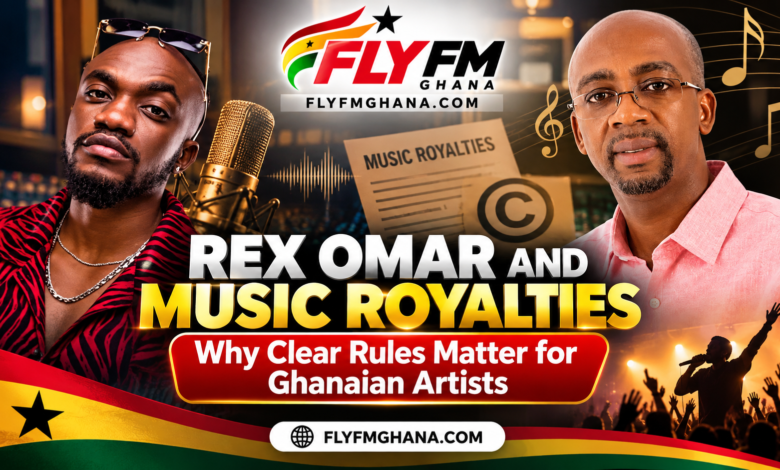
Music royalties are once again part of Ghana’s entertainment conversation after veteran highlife musician Rex Omar questioned whether singer Mr Drew had met the requirements to receive royalties, according to Graphic Showbiz coverage published on October 16, 2026. The comments touch a wider issue for musicians: how a song’s ownership, registration, usage and distribution are documented before payments are calculated.
This article does not determine the merits of any individual artist’s claim. Eligibility and payment questions depend on records and the applicable rules and should be resolved by the relevant rights-management bodies using verified documentation. The broader lesson for musicians is that a successful release needs both creative promotion and careful rights administration.
Why royalty questions can become complicated
A song may involve a composer, lyricist, performer, producer, publisher, label and other contributors. Their roles are not always identical. The person who performs a recording may not own all the composition rights, while a producer or co-writer may have a separate contractual interest. If agreements are informal or credits are incomplete, disputes can arise years after a track becomes popular.
Royalties can also arise from different kinds of use, including public performance, broadcasting, digital distribution and other licensed uses. Each channel may rely on different reporting systems and agreements. A musician who assumes that every stream, radio play or public performance automatically produces a payment may misunderstand how reporting, licensing, collection and distribution work.
What the current debate does—and does not—establish
Graphic Showbiz reported that Rex Omar questioned whether Mr Drew had met the requirements for receiving royalties after the singer complained about not receiving payments. The report can be read through Graphic Online’s showbiz coverage. That account records a public disagreement; it is not, on its own, an independent audit of any artist’s registration, usage records or payment history.
For that reason, readers should avoid turning a comment into a definitive conclusion about who is entitled to money. The relevant records, agreements and procedures must determine an individual case. Public discussion is useful when it encourages transparency, but it should not replace evidence.
A practical checklist for artists
- Confirm writer and performer credits: Ensure the correct names and roles are attached to each release.
- Keep split sheets: Where several people contributed to a song, record the agreed ownership shares in writing.
- Store contracts: Keep copies of producer agreements, label deals, publishing arrangements and distribution terms.
- Check registration details: Confirm that relevant works and repertoire information have been submitted accurately to the appropriate rights-management organisations.
- Track releases and identifiers: Maintain a catalogue of titles, release dates, versions and the identifiers used by distributors.
- Review statements: Compare royalty statements with release activity and ask specific questions when entries appear missing or incorrect.
What labels, managers and distributors should do
Professional teams can reduce confusion by assigning responsibility for registrations, keeping a central catalogue and checking metadata before a release goes live. They should explain to artists which rights are being licensed, for how long, in which territories and how income will be reported. Musicians should understand the difference between a distribution service, a publishing arrangement and a collective rights-management system before signing an agreement.
Labels and managers should also provide statements in a language artists can understand. A statement that lists a total without explaining the reporting period, deductions or revenue source makes it difficult to identify errors. Artists should be able to ask questions without being treated as disloyal or unprofessional.
What fans and broadcasters can do
Fans support musicians when they use legitimate listening services, buy authorised releases and attend shows. Broadcasters and event organisers can maintain accurate playlists and set lists because usage reporting is only useful when the underlying data is correct. Where licensing obligations apply, clear records help ensure that the appropriate organisations can assess and distribute payments.
Music journalists also have a role. Reporting should distinguish between an artist’s allegation, another person’s response, official procedures and a verified finding. Where a claim has not been independently confirmed, that uncertainty should be stated clearly. This approach protects artists and audiences while still allowing legitimate questions about fairness and transparency.
Better documentation strengthens the industry.
Ghana’s music industry benefits when creators can understand how their work is credited and how revenue is collected. Clear documentation does not resolve every disagreement, but it makes disputes easier to investigate and gives emerging musicians a stronger foundation for professional growth. Artists can make rights administration part of their release plan just as they plan promotion, visuals and live performances.
Fly FM Ghana will continue to follow the people and business issues shaping Ghanaian music. Explore more entertainment updates at Fly FM Ghana.
Sources
Graphic Online / Graphic Showbiz — entertainment coverage, October 16, 2026 · Ghana Copyright Office







One Comment