Ghana Steps Up Flood Response After Devastating June Floods
Ghana Steps Up Flood Response After Devastating June Floods

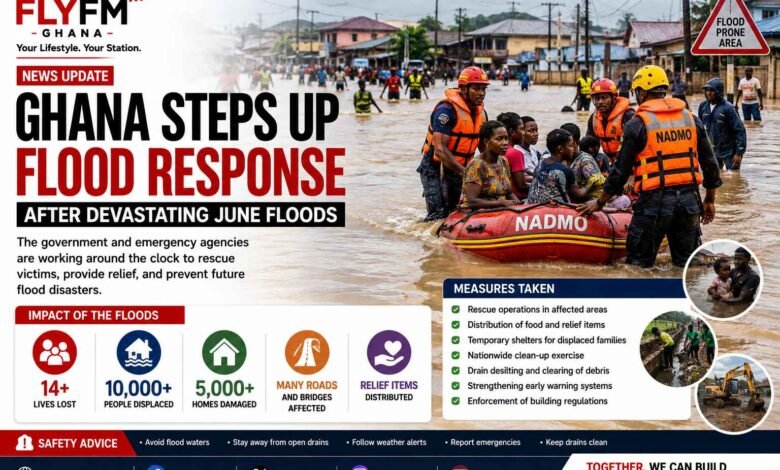
Ghana Steps Up Flood Response After Devastating June Floods.
The Government of Ghana has intensified emergency response and recovery efforts following the severe flooding that affected several parts of the country in June 2026. Torrential rains caused widespread flooding in Greater Accra, Central, Volta, Ashanti, Western, Eastern and other regions, resulting in loss of lives, displacement of thousands of residents and significant damage to homes, businesses and public infrastructure.
According to official reports, tens of thousands of people were displaced, while emergency services rescued hundreds of stranded residents during the peak of the flooding.
READ ALSO: How Online Radio Is Transforming Entertainment in Ghana
Emergency Measures Taken
Rescue Operations
The National Disaster Management Organisation (NADMO), Ghana Armed Forces, Ghana National Fire Service and other emergency agencies carried out rescue operations in flood-affected communities. More than 470 people were rescued during the flooding in Greater Accra.
Relief Distribution
Authorities distributed relief items including food, drinking water, mattresses, blankets and other essential supplies to displaced families while temporary shelters were established for affected residents.
Nationwide Clean-Up Exercise
Following the floods, the government launched a nationwide clean-up campaign aimed at clearing drains, removing debris and reducing the risk of disease outbreaks in affected communities. Military engineers and heavy equipment were deployed to restore damaged areas.
Long-Term Flood Prevention Measures
The government has announced several measures to reduce future flooding, including:
- Expanding and desilting drainage systems.
- Removing structures built on waterways and drainage channels.
- Strengthening early warning systems.
- Improving enforcement of building and planning regulations.
- Restoring wetlands and improving urban drainage infrastructure.
Safety Advice for Residents
Authorities continue to advise the public to:
- Avoid driving or walking through floodwaters.
- Stay away from open drains during heavy rainfall.
- Follow weather alerts and official emergency announcements.
- Report emergencies promptly to local authorities.
- Keep drains around homes free from rubbish and other obstructions.
Looking Ahead
Experts say that while emergency response is essential, long-term solutions such as improved urban planning, better drainage infrastructure and responsible waste disposal will be critical in reducing the impact of future floods. Public cooperation and adherence to planning regulations are also expected to play an important role in strengthening Ghana’s resilience against extreme weather events.
FOLLOW US ON FACEBOOK