Vitamin D Deficiency: Signs, Causes and How to Prevent It
Vitamin D Deficiency: Signs, Causes and How to Prevent It

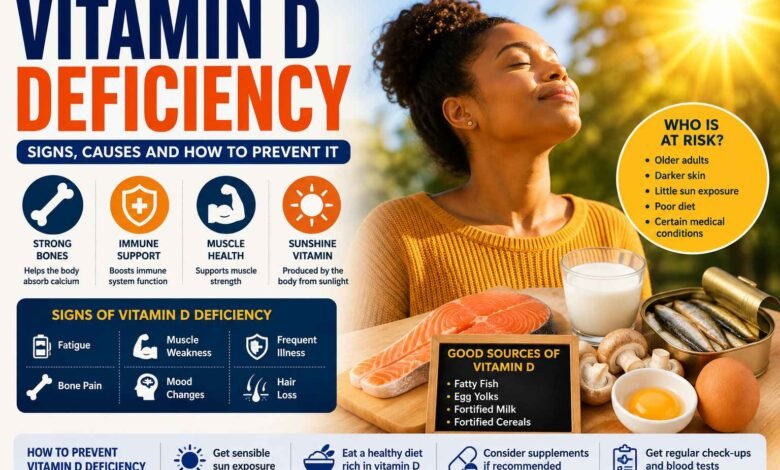
Vitamin D Deficiency: Signs, Causes and How to Prevent It.
Vitamin D is often called the “sunshine vitamin” because your body produces it when your skin is exposed to sunlight. It plays a crucial role in keeping your bones, muscles and immune system healthy by helping the body absorb calcium. Despite its importance, vitamin D deficiency is common worldwide and may go unnoticed because symptoms can be mild or develop gradually.
Understanding the causes, symptoms and prevention of vitamin D deficiency can help you protect your health and reduce the risk of long-term complications.
What Is Vitamin D Deficiency?
Vitamin D deficiency occurs when your body does not have enough vitamin D to support normal body functions. This may happen because you do not get enough sunlight, your diet lacks vitamin D, your body cannot absorb it properly, or certain medical conditions interfere with how it is processed.
READ MORE: 10 Daily Habits That Can Help Keep Your Kidneys Healthy
Why Is Vitamin D Important?
Vitamin D supports several essential functions in the body, including:
- Helping the body absorb calcium and phosphorus.
- Building and maintaining strong bones and teeth.
- Supporting healthy muscles.
- Contributing to normal immune system function.
- Helping nerves function properly.
Without enough vitamin D, bones can become weak, increasing the risk of fractures and conditions such as rickets in children and osteomalacia in adults.
Common Signs and Symptoms
Many people experience no symptoms at first, but deficiency may eventually cause:
- Frequent tiredness or fatigue.
- Muscle weakness.
- Bone pain.
- Back pain.
- Mood changes.
- Frequent illness or infections.
- Slow wound healing.
- Hair loss in some cases.
If these symptoms persist, it is important to seek medical advice rather than self-diagnosing.
Who Is Most at Risk?
Certain groups are more likely to develop vitamin D deficiency, including:
- Older adults.
- People with darker skin.
- Individuals who spend little time outdoors.
- People who always wear clothing that covers most of the skin.
- Those with digestive disorders that reduce nutrient absorption.
- People with kidney or liver disease.
- Breastfed infants without supplementation.
Foods Rich in Vitamin D
Although sunlight is the primary source, vitamin D can also be obtained from food, including:
- Salmon.
- Sardines.
- Mackerel.
- Egg yolks.
- Fortified milk.
- Fortified cereals.
- Fortified plant-based drinks.
How to Prevent Vitamin D Deficiency
You can reduce your risk by:
- Spending sensible time outdoors in sunlight while protecting your skin from sunburn.
- Eating foods naturally rich in vitamin D.
- Choosing fortified foods when available.
- Taking vitamin D supplements if recommended by a healthcare professional.
- Having your vitamin D level checked if you are at higher risk.
Can Too Much Vitamin D Be Harmful?
Yes. While supplements are beneficial for people who need them, taking excessive amounts can lead to harmful levels of calcium in the blood, potentially affecting the kidneys and heart. Vitamin D supplements should therefore be taken according to medical advice.
When Should You See a Doctor?
Consult a healthcare professional if you:
- Experience persistent bone pain or muscle weakness.
- Have repeated fractures.
- Feel constantly tired without an obvious cause.
- Belong to a high-risk group for vitamin D deficiency.
A simple blood test can determine whether your vitamin D level is low.
Conclusion
Vitamin D is essential for strong bones, healthy muscles and a well-functioning immune system. Although deficiency is common, it is often preventable through sensible sun exposure, a balanced diet and appropriate supplementation when needed.
If you think you may have a vitamin D deficiency, speak with a qualified healthcare professional for proper testing and treatment. Taking care of your vitamin D levels today can help protect your health well into the future.
FOLLOW US ON FACEBOOK