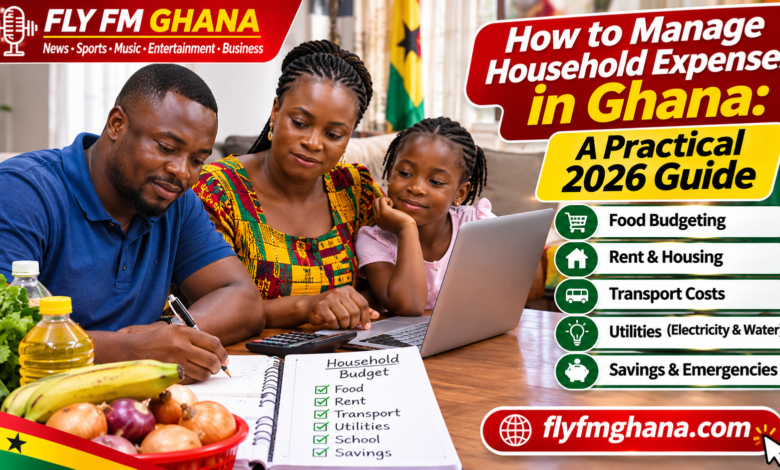
How to Manage Household Expenses in Ghana: A Practical 2026 Guide
Managing a household budget in Ghana requires more than writing down how much money comes in and goes out. Families must plan for food, rent, transport, electricity, water, school expenses, healthcare and unexpected emergencies. When several expenses arrive at the same time, even a regular monthly income can become difficult to manage.
The good news is that households can make better financial decisions with a clear plan. You do not need a large salary to start budgeting. You need to understand your spending, set priorities and make deliberate choices about how to use your income.
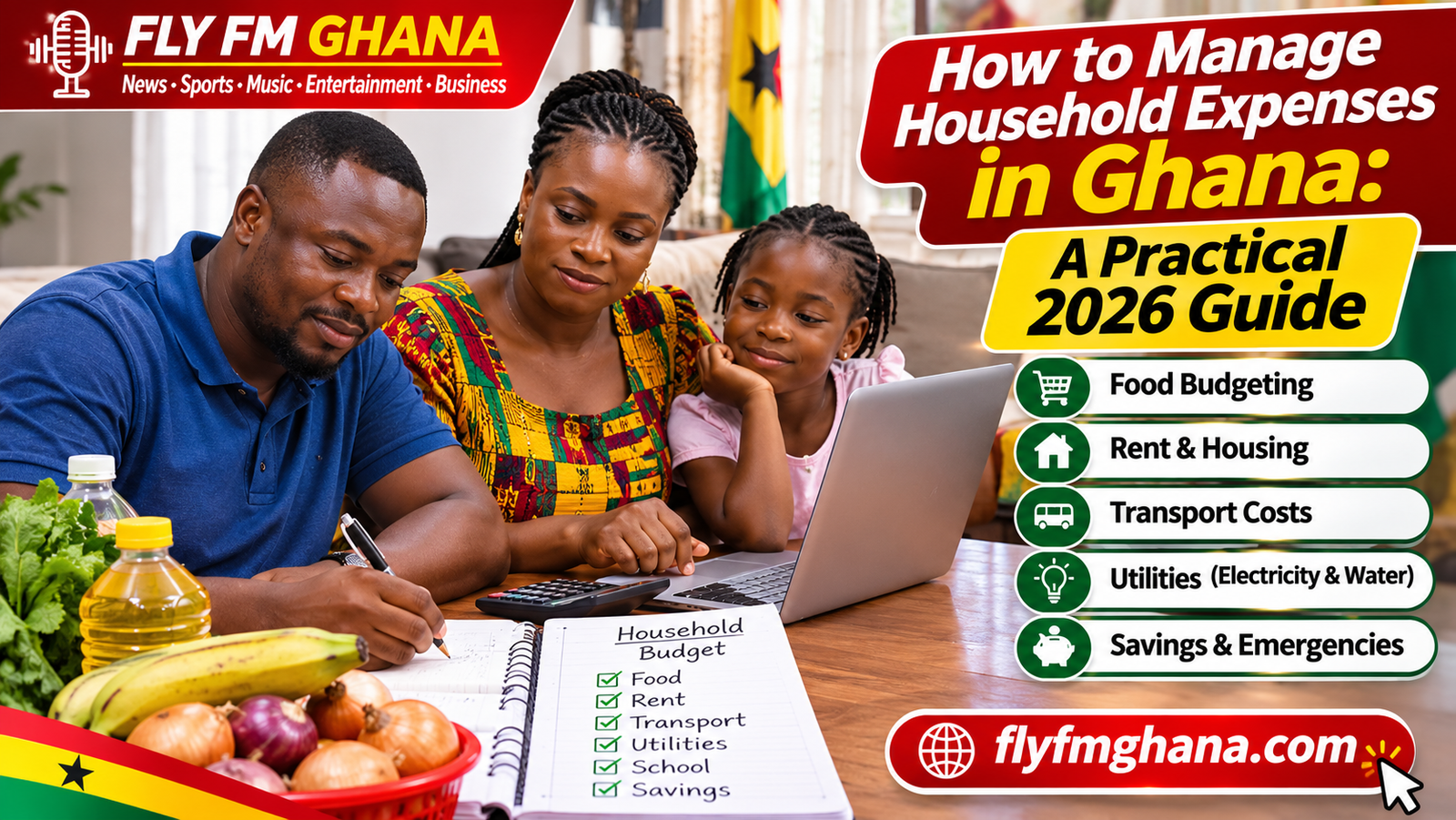
This guide explains how to manage household expenses in Ghana in 2026. It covers practical budgeting methods, market shopping, transport costs, utility bills, savings and ways to reduce unnecessary spending without sacrificing important family needs.
Why household budgeting matters in Ghana
A household budget gives every cedi a purpose. It helps families understand which expenses require immediate attention and which ones they can reduce or postpone.
Ghana’s inflation figures also show why families should review their budgets regularly. The Ghana Statistical Service reported annual consumer inflation of 5.2% for September 2026. That was slightly higher than the 5.0% recorded in August.
However, lower inflation does not mean that every product has become cheaper. It means the general price level is increasing more slowly than before. A family may still pay more for an item than it paid several months or years ago.
This difference matters. Families should not assume that their old shopping budgets will cover current prices. They should compare prices, review receipts and adjust their plans when necessary.
The September figures are available through the Ghana Statistical Service.
1. Start with your total household income.
Before deciding how much to spend, calculate how much money enters your household each month.
Include reliable sources of income such as:
- Monthly salaries and wages.
- Business income after necessary operating costs.
- Regular freelance or contract payments.
- Reliable rental income.
- Other regular household contributions.
Do not treat uncertain income as guaranteed money. If you receive occasional gifts, bonuses or irregular business payments, keep them separate from your basic monthly income until you actually receive them.
For households with more than one income earner, agree on how much each person will contribute towards shared expenses. This helps prevent confusion and makes planning easier.
For example, a household that receives GH¢5,000 monthly should first identify the amount available after essential deductions and obligations. The family can then plan how to divide the remaining money.
2. Separate essential expenses from optional spending.
Not every expense has the same level of importance.
Essential expenses include food, accommodation, transport to work, utilities, basic healthcare and education. These needs should receive priority.
Optional expenses may include frequent restaurant visits, entertainment subscriptions, expensive clothing, unnecessary upgrades and impulse purchases.
This does not mean families must stop enjoying life. It means they should decide how much they can comfortably spend on leisure after covering their important responsibilities.
A simple way to organise expenses is to divide them into three groups:
Essential: Food, rent, electricity, water, transport, healthcare and school needs.
Important but adjustable: Mobile data, clothing, family events, household supplies and personal care.
Optional: Luxury purchases, entertainment, frequent takeaways and non-essential subscriptions.
Review these groups every month. If your expenses exceed your income, reduce optional spending first. Avoid cutting important food or medical needs simply to maintain an expensive lifestyle.
3. Plan food shopping before visiting the market.
Food can take a significant share of a household’s income. Shopping without a plan makes it easier to buy unnecessary items or spend more than expected.
Prepare a weekly food list before visiting the market or supermarket.
For many Ghanaian households, useful shopping categories include:
- Rice, maize and other grains.
- Beans and other legumes.
- Yam, cassava and plantain.
- Tomatoes, onions, pepper and garden eggs.
- Fish, eggs and other protein sources.
- Vegetables and fruits.
- Cooking oil and basic household ingredients.
Choose foods that suit your household’s needs and budget. Local seasonal produce may offer better value at certain times of the year, although prices vary by location and supply.
Compare prices at different sellers when practical. A supermarket may offer convenience, while a local market may offer more flexibility in quantities. Neither option is automatically cheaper for every product.
Also consider buying quantities that your household can use before food spoils. A large purchase is not a saving if part of it ends up in the bin.
Make a weekly meal plan.
A meal plan helps you use ingredients efficiently. It also reduces the temptation to buy prepared food whenever nobody knows what to cook.
For example, a family can plan rice and stew for one day, beans and plantain for another, and yam with fish and vegetables on a different day.
Use leftovers safely and creatively. Cook only the amount your household can reasonably consume, and store food properly.
Do not sacrifice nutrition to save money. Aim for balanced meals that include suitable sources of carbohydrates, protein and vegetables.
4. Include transport costs in your monthly budget.
Transport expenses can become a major burden for workers, students, traders and families who travel regularly.
Public transport fares in Ghana increased by 8% from September 26, 2026. The adjustment covers shared taxis, intra-city trotros and intercity services.
The Information Services Department reported that the Ghana Private Road Transport Union and the Ghana Road Transport Coordinating Council announced the change after consultations with the Ministry of Transport.
The unions said the adjustment reflected changes in fuel prices, spare parts and vehicle maintenance costs.
Read the official announcement from the Information Services Department.
To manage transport costs:
- Calculate your usual daily transport spending.
- Multiply it by the number of days you expect to travel.
- Add a reasonable amount for occasional journeys.
- Review your spending when fares or travel patterns change.
- Avoid unnecessary trips when you can combine errands safely.
For example, someone who travels to work five days a week should calculate the cost of the return journey for the entire working month. This gives a more realistic figure than estimating transport costs one day at a time.
If you use ride-hailing services, compare the cost with public transport where practical. Set a monthly limit for non-essential trips.
5. Control electricity and water consumption
Electricity and water bills can affect household finances, particularly when families use air conditioners, electric heaters, refrigerators and other high-consumption appliances.
Start by understanding how your household uses electricity.
Switch off lights and appliances when they are not needed. Avoid leaving equipment running unnecessarily. Use energy-efficient bulbs and maintain appliances according to the manufacturer’s instructions.
Air conditioners can increase electricity consumption considerably. Use them thoughtfully and keep doors and windows closed while they operate.
For water, repair leaking taps and pipes promptly. Avoid leaving taps running during washing and cleaning. Use water carefully and store it safely when necessary.
Check your bills or prepaid meter regularly. This helps you identify unusual increases before they become a bigger problem.
The Public Utilities Regulatory Commission publishes information about electricity and water tariffs. Households can check its official website for tariff announcements and consumer information: PURC Ghana.
Do not rely on old utility estimates when planning your budget. Check the applicable tariff and your household’s actual consumption.
6. Treat rent as a major financial commitment
Rent can place serious pressure on households, especially when landlords request large advance payments.
Before accepting a rental agreement, calculate the full amount required. Include rent, agency fees where applicable, moving costs, utility connections and any agreed service charges.
Do not judge a property only by its monthly rent. Consider its location and the transport costs associated with living there.
A cheaper property far from work may increase your daily travel expenses. A more expensive property closer to work may reduce transport costs. Compare the full monthly impact before making a decision.
Ask for the rental terms in writing. Understand the payment period, responsibilities for repairs, utility arrangements and conditions for ending the agreement.
Ghana’s Rent Act contains rules concerning rent advances. Tenants should consult the Rent Control Department or seek qualified legal advice when a landlord demands payments they believe may breach the law.
Never hand over a large payment without checking the property, verifying the landlord or authorised agent, and obtaining a proper receipt.
7. Build an emergency fund, even with a small income.
Unexpected expenses can disrupt a household budget. A family may suddenly need money for medical care, repairs, travel or a temporary loss of income.
An emergency fund provides some protection against these situations.
You do not need to save a large amount immediately. Start with a figure that your income can support.
For example, you could set aside GH¢10, GH¢20 or GH¢50 whenever you receive money. The correct amount depends on your circumstances. Consistency matters more than starting with a large contribution.
Keep emergency savings separate from money intended for shopping and entertainment. Choose a secure and accessible place for the funds.
As the balance grows, work towards covering several weeks of essential expenses. Later, you can aim for a larger reserve that reflects your household’s needs and income stability.
Do not use emergency savings for routine shopping or avoidable luxury purchases.
8. Manage school and family expenses ahead of time
Parents and guardians should prepare for school expenses before the start of a new term.
School fees, uniforms, books, transport, meals and other requirements can arrive together. Waiting until the last minute can force families to borrow money or make rushed purchases.
Ask schools for their current requirements and payment deadlines. Keep receipts and written records of payments.
Where possible, spread predictable education costs across the months before the next term. This makes the expense easier to manage.
Families should also discuss major purchases before making them. A shared plan can reduce disagreements and prevent duplicate spending.
9. Reduce debt and avoid unnecessary borrowing
Borrowing can help during a genuine emergency or support a carefully planned investment. However, frequent borrowing for ordinary household spending can create long-term pressure.
Before taking a loan, calculate the total repayment amount. Include interest, fees, repayment dates and any penalties.
Ask yourself whether the repayment will leave enough money for food, rent, transport and other essential needs.
Avoid borrowing simply to maintain an expensive lifestyle. Do not take a new loan without understanding how it affects existing financial commitments.
If you already have several debts, list each balance, interest rate and repayment date. Prioritise a clear repayment plan and contact your lender early if you expect difficulty meeting an instalment.
Be cautious of people or online platforms promising guaranteed returns or unusually high profits. Verify financial service providers before sending money.
10. Use a simple monthly household budget
A written budget makes financial decisions easier. You can use a notebook, spreadsheet or budgeting application.
Here is an illustrative example for a household with GH¢5,000 available each month.
| Expense | Illustrative amount |
|---|---|
| Food and groceries | GH¢1,400 |
| Rent provision | GH¢1,000 |
| Transport | GH¢600 |
| Electricity and water | GH¢300 |
| Education and family needs | GH¢500 |
| Healthcare and personal care | GH¢250 |
| Savings and emergencies | GH¢400 |
| Communication | GH¢150 |
| Other expenses | GH¢400 |
| Total | GH¢5,000 |
These figures are examples, not official Ghanaian household averages. Your actual budget will depend on your location, household size, rent, income and personal responsibilities.
A family living in central Accra may have different accommodation and transport costs from a household in a smaller town. Adjust every category to reflect your actual circumstances.
If rent or school fees take a larger share of your income, reduce other flexible categories where possible. Do not copy another family’s budget without checking whether it fits your situation.
11. Hold a short household money review every month
Budgeting works best when everyone involved understands the plan.
At the end of each month, review the money received and the money spent. Compare your actual expenses with the original budget.
Ask three important questions:
- Which expense was higher than expected?
- Which spending decision helped us save money?
- What should we change next month?
Keep the discussion practical. Avoid blaming family members for every expense. Focus on finding solutions and agreeing on priorities.
If your income changes, update the budget. If school fees increase or transport costs change, adjust the relevant category.
A budget should guide your decisions. It should not become a document that you prepare once and never use again.
12. Watch out for lifestyle spending that quietly drains income
Some expenses appear small but become significant when repeated.
Daily snacks, frequent mobile data purchases, takeaway meals, unused subscriptions and impulse shopping can gradually consume money intended for important needs.
This does not mean every small purchase is wrong. It means you should understand how repeated spending affects your finances.
Try recording every purchase for seven days. You may discover that certain habits cost more than you expected.
Before buying a non-essential item, consider waiting a day. This simple pause can help you decide whether you really need it.
Avoid comparing your lifestyle with what you see on social media. People often display expensive purchases without showing the loans, financial support or personal circumstances behind them.
A stable household is not measured by the number of expensive items it owns. It is measured by its ability to meet important needs and prepare for the future.
A practical 30-day plan for Ghanaian households
You can begin improving your household finances this month.
Week 1: Understand your spending
Write down all income and expenses. Collect receipts and check your mobile money and bank transaction records.
Week 2: Create your budget
Set limits for food, transport, utilities, rent, education and other responsibilities. Give priority to essential needs.
Week 3: Review spending habits
Compare market prices, plan meals, reduce avoidable journeys and check electricity and water usage.
Week 4: Start saving and review progress
Set aside an affordable amount. Compare your actual spending with your plan and make adjustments for the next month.
Continue the process every month. Small improvements can become meaningful when you maintain them over time.
Frequently Asked Questions
How can I manage household expenses with a low income in Ghana?
Start by recording your income and essential expenses. Prioritise food, accommodation, transport, healthcare and education. Reduce unnecessary spending, compare prices and save a small amount when possible.
How much should a Ghanaian household spend on food?
There is no single amount that suits every family. Food spending depends on household size, location, dietary needs and shopping habits. Prepare a weekly meal plan and use actual market prices to set a realistic limit.
How can I reduce my electricity bill in Ghana?
Switch off unused appliances, use energy-efficient lighting, maintain equipment and manage air-conditioner use. Check your meter regularly to understand your consumption.
Why should I keep an emergency fund?
An emergency fund helps cover unexpected expenses without immediately relying on loans. Start with an affordable amount and build it gradually.
Does lower inflation mean prices have returned to normal?
No. Lower inflation means prices are increasing more slowly than before. It does not automatically mean that goods and services have become cheaper.
How can I reduce transport spending?
Plan journeys, combine errands where practical and calculate your monthly commuting costs. Compare transport options and include the latest approved fares in your budget.
Should I borrow money to cover household expenses?
Borrowing should not become a regular solution for ordinary spending. Before taking a loan, understand the total repayment cost and make sure you can still meet essential household needs.
Conclusion: Make every cedi serve a purpose
Managing household expenses in Ghana requires planning, discipline and regular review. Families cannot control every price change, but they can make better decisions about how they spend their income.
Start with a clear budget. Plan food shopping, monitor transport and utility costs, prepare for school expenses and build emergency savings gradually. Avoid unnecessary borrowing and review your spending every month.
The goal is not to stop enjoying life. It is to create a household financial plan that protects essential needs while leaving room for future goals.
For more Ghanaian news, lifestyle information and practical updates, visit FLY FM Ghana.