Yellow Fever in Ghana: Latest GHS Update, Symptoms and Prevention Advice for the Public
Ghana’s public health authorities have provided a new update on the yellow fever situation after recording confirmed cases in parts of the Upper West Region.
The Ghana Health Service (GHS) says it has curtailed an outbreak that occurred between September and the first half of October 2026. The latest update, announced on November 1, follows vaccination and other response measures in affected communities.
The announcement offers encouraging news. However, health authorities continue to investigate some reported deaths to establish whether yellow fever caused them.
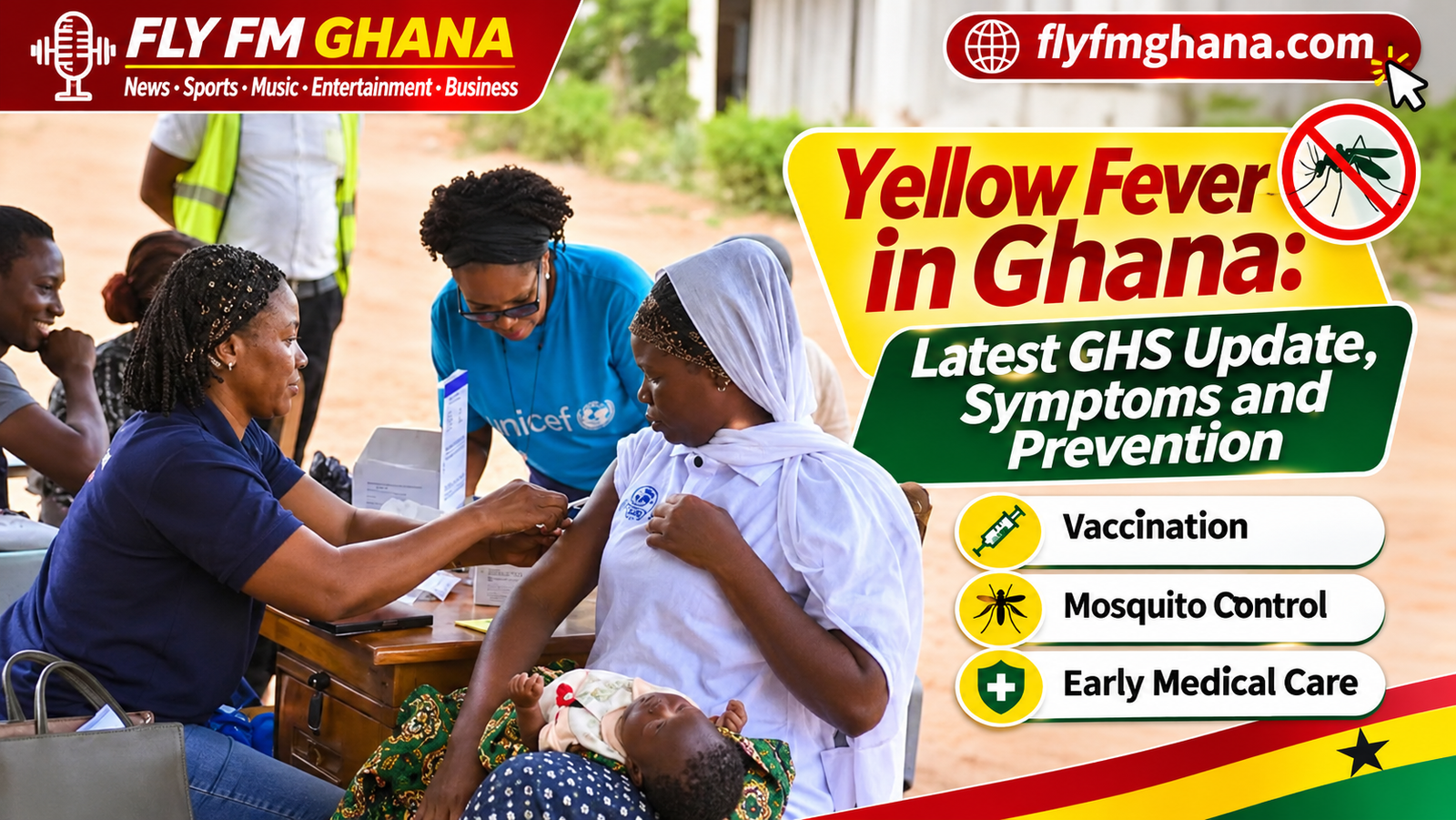
The development highlights the importance of vaccination, disease surveillance and public awareness. It also reminds communities that mosquito-borne diseases require continued attention, even when an outbreak response shows positive results.
Yellow fever is a viral disease that infected mosquitoes transmit to humans. It can cause serious illness and, in severe cases, death. Vaccination offers strong protection, while mosquito-control measures help reduce exposure.
For residents of affected communities and people travelling within Ghana, reliable information remains essential.
FLY FM Ghana examines the latest update, explains what yellow fever is, identifies symptoms people should recognise and outlines practical steps families can take to protect themselves.
Ghana Health Service announces progress in containing the outbreak.
On Sunday, November 1, the Director-General of the Ghana Health Service, Dr Samuel Kaba Akoriyea, said health authorities had curtailed the yellow fever outbreak recorded between September and the first half of October.
According to the report by 3News, four cases received laboratory confirmation. The affected locations included Sissala West, Wa West, Etu and Nadowli-Kaleo.
The Director-General explained that laboratories in Dakar, Senegal, confirmed the cases through testing.
Health authorities responded with vaccination and other public health measures. These interventions formed part of efforts to protect communities and prevent further transmission.
Dr Akoriyea also said investigations were continuing to determine whether some deaths reported in affected communities were actually caused by yellow fever.
This distinction matters. A suspected case does not automatically become a confirmed case. Health authorities need appropriate clinical and laboratory evidence before they attribute an illness or death to a particular disease.
The latest announcement should therefore be understood accurately. The Ghana Health Service says it has curtailed the outbreak. That statement does not necessarily mean that every public health risk has disappeared or that all investigations have ended.
Residents should continue to follow official health advice and vaccination instructions.
Where did Ghana record the confirmed cases?
The Upper West Region featured prominently in the initial outbreak response.
On October 9, the Ministry of Health announced that laboratory tests had confirmed three yellow fever cases in the region. The Information Services Department reported that all three confirmed cases resulted in deaths.
The Ministry said investigations had identified suspected infections in areas including Sissala West and Wa West.
The Ghana Health Service and its partners then strengthened surveillance and response activities.
The service also began a reactive vaccination campaign in affected districts. An announcement published by the Ghana Health Service on October 15 said the campaign covered Wa West, Sissala East and Sissala West.
On October 24, the Director-General visited the Upper West Region. The GHS reported that he engaged the Siriyiri community on yellow fever vaccination and handed over 100 motorbikes to support primary healthcare delivery in the region.
The November 1 update reported four laboratory-confirmed cases in the outbreak.
These developments show why communities should rely on updated information. Figures from an earlier announcement may differ from later reports as investigations and laboratory testing continue.
Residents should avoid circulating old figures as though they represent the latest national position.
What is yellow fever?
Yellow fever is an acute viral disease that infected mosquitoes transmit to humans.
The disease occurs in tropical parts of Africa and South America. It can affect people who live in or travel to areas where infected mosquitoes circulate.
Yellow fever does not spread through ordinary direct contact between people. An infected mosquito transmits the virus through its bite.
The World Health Organization identifies vaccination as the most important preventive measure.
Some infected people experience mild symptoms. Others develop severe illness that can affect the liver, kidneys and other organs.
In severe cases, yellow fever can cause jaundice, bleeding, organ failure and death.
The name comes from jaundice, a condition that causes yellowing of the skin and the whites of the eyes. Jaundice can occur when the disease affects the liver.
People should not wait for jaundice before seeking medical attention. Early symptoms also require attention, especially when someone lives in or has travelled to an affected area.
What are the symptoms of yellow fever?
Yellow fever symptoms usually appear after an incubation period of three to six days.
The World Health Organization identifies several possible early symptoms.
These include:
- Fever.
- Headache.
- Muscle pain.
- Backache.
- Nausea.
- Vomiting.
- Weakness and fatigue.
- Loss of appetite.
Some people recover after the initial illness. Their symptoms may improve within a few days.
However, some patients enter a more severe phase. Their fever may return, and they may develop serious complications.
Warning signs can include:
- Yellowing of the skin or eyes.
- Unusual bleeding.
- Severe abdominal pain.
- Persistent vomiting.
- Reduced urine output.
- Severe weakness.
- Confusion or other signs of serious illness.
These symptoms require urgent medical assessment.
Not everyone with a fever has yellow fever. Malaria and other infections can cause similar symptoms.
People should therefore avoid self-diagnosis. A qualified health professional can assess symptoms and arrange appropriate tests.
Anyone who develops concerning symptoms should visit a health facility promptly. They should tell the health worker about recent travel, possible mosquito exposure and any contact with affected areas.
Why yellow fever vaccination matters
Vaccination provides the strongest protection against yellow fever.
The World Health Organization says one dose of the yellow fever vaccine provides long-lasting, generally lifelong protection for most people.
The vaccine plays an important role in preventing illness and controlling outbreaks.
During an outbreak, health authorities may organise reactive vaccination campaigns in affected communities and areas considered at risk.
The Ghana Health Service began a reactive vaccination campaign in parts of the Upper West Region in October 2026.
Residents should follow the instructions of authorised vaccination teams. They should also obtain information about eligibility, vaccination locations and campaign dates from official health authorities.
People should not assume that every vaccination campaign follows the same arrangements. The target age group, locations and timing depend on the instructions for that particular exercise.
Anyone with questions about whether they should receive the vaccine should speak with a qualified health professional.
People planning international travel should also check the vaccination requirements and health advice for their destination.
How mosquitoes spread yellow fever
Mosquitoes transmit the yellow fever virus through bites.
Different mosquito species can play roles in transmission in urban, rural and forest environments.
In some settings, mosquitoes acquire the virus from infected people or non-human primates and later transmit it to another host.
The presence of suitable mosquito breeding sites can increase the risk of mosquito-borne disease transmission.
Standing water around homes, workplaces and public spaces can provide breeding opportunities for mosquitoes.
That is why environmental sanitation matters.
Households should regularly inspect their surroundings and remove containers that collect rainwater.
Water storage containers should remain properly covered. Drains should not become blocked with rubbish, and discarded tyres should not collect water.
Community clean-up exercises can also help reduce mosquito breeding sites.
These steps support the prevention of several mosquito-borne diseases. However, they do not replace yellow fever vaccination.
Practical steps families can take to reduce mosquito exposure
Residents can take simple precautions to reduce contact with mosquitoes.
First, remove stagnant water around homes. Check old tyres, buckets, bottles, flower pots and other containers.
Second, cover water storage containers. This helps prevent mosquitoes from using stored water as a breeding site.
Third, use mosquito repellents according to the product instructions.
Fourth, wear clothing that covers much of the body when mosquito exposure is likely.
Fifth, keep doors and windows protected with suitable screens where possible.
Families should also support environmental sanitation activities in their communities.
Community leaders, schools, churches, mosques and local organisations can help spread accurate information.
People should not assume that mosquito bites are harmless simply because they live outside an area where authorities have confirmed an outbreak.
Preventive habits remain useful throughout the year.
What should residents do if they develop symptoms?
Anyone who develops a fever, headache, muscle pain or other concerning symptoms should seek medical advice.
This is especially important for people living in affected areas or those who have recently travelled there.
People should not rely on herbal mixtures, leftover medicines or advice from unqualified individuals as a substitute for medical assessment.
They should also avoid taking medicines without checking whether they are suitable for their condition.
Some medicines can increase bleeding risks in certain illnesses. A healthcare professional can advise on safe treatment.
When visiting a health facility, patients should explain when their symptoms began and whether they have travelled to areas with reported infections.
They should also mention any known mosquito exposure and vaccination history.
Health workers can decide whether the symptoms require testing or further investigation.
Prompt medical attention can help patients receive appropriate care and reduce the risk of complications.
Why suspected cases need laboratory confirmation
Disease surveillance depends on accurate information.
A person may develop symptoms that resemble yellow fever. However, other diseases can produce similar signs.
Laboratory testing helps health authorities establish whether the yellow fever virus caused an infection.
In the October outbreak announcements, Ghanaian authorities reported that samples went to a World Health Organization-accredited laboratory in Dakar, Senegal, for confirmation.
This process helped establish the confirmed cases.
The Director-General’s November 1 comments also highlighted the importance of accurate communication.
He cautioned health workers against publicly declaring suspected outbreaks without the necessary authorisation and confirmation.
That message is important for the media and the public.
Unverified claims can create unnecessary fear. They can also confuse communities and make it harder for people to understand official health instructions.
Journalists and social media users should identify whether information comes from a confirmed official announcement or an unverified report.
People should avoid sharing messages that name communities, announce deaths or claim an outbreak has spread without reliable evidence.
Accurate communication supports public trust and effective disease control.
Ghana’s wider public health response
The yellow fever response forms part of broader efforts to strengthen disease surveillance and primary healthcare in Ghana.
The Ghana Health Service has reported several activities aimed at improving early detection and community-level healthcare.
These include vaccination campaigns, community engagement, disease surveillance and support for health workers.
The service has also reported work on wastewater environmental surveillance.
According to its October 11 announcement, the GHS is working with the Gates Foundation, Noguchi Memorial Institute for Medical Research, KNUST and other partners to strengthen guidelines for this approach.
Wastewater surveillance involves collecting and testing wastewater samples for disease-causing pathogens.
It can help public health experts identify infections circulating in communities, including some that may go undetected because infected people have mild or no symptoms.
The initiative forms an additional layer of disease monitoring. It does not replace clinical testing or other established surveillance methods.
Ghana’s ability to detect and respond to outbreaks depends on coordination between laboratories, health facilities, district authorities, communities and national health agencies.
The role of communities in preventing outbreaks
Health authorities cannot control mosquito-borne diseases without community cooperation.
Residents can support prevention by keeping their surroundings clean and following vaccination advice.
Community leaders can help organise sanitation exercises and encourage residents to attend official vaccination activities.
Schools can teach children about mosquito breeding sites and basic disease prevention.
Local radio stations and other media organisations can help explain health announcements in clear language.
They should also avoid spreading frightening headlines that exaggerate the situation.
Religious organisations, traditional authorities and civil society groups can support public education.
When communities receive accurate information, they can make better decisions and respond more effectively to health guidance.
Residents should also report unusual health concerns to appropriate health facilities rather than relying on rumours.
What travellers should know
People travelling within Ghana should follow current health advice from the Ghana Health Service.
Travellers heading to areas with recent yellow fever activity should check whether they need vaccination and whether their vaccination records meet travel requirements.
Anyone travelling internationally should check the destination country’s entry rules.
Some countries require proof of yellow fever vaccination from travellers arriving from countries with transmission risk.
The International Certificate of Vaccination or Prophylaxis may be relevant for such travel.
Travellers should consult an authorised vaccination centre or travel health professional before departure.
They should not rely on old travel advice because requirements can change.
People who develop fever or other concerning symptoms after travelling should tell their healthcare provider where they have been.
That information can help health professionals assess possible exposure.
Why the November 1 update matters
The Ghana Health Service’s latest announcement provides encouraging information about the response in affected communities.
The service says it has curtailed the outbreak after confirming four cases.
Vaccination and other response measures formed part of the containment effort.
However, investigations into some reported deaths remain important. They will help authorities establish the causes and provide a more accurate public health picture.
The update also reinforces three major lessons.
First, vaccination remains central to yellow fever prevention.
Second, early reporting and laboratory confirmation help health authorities respond accurately.
Third, community participation is essential for controlling mosquito breeding and supporting public health campaigns.
Ghanaians should remain informed without spreading panic.
The public should follow updates from the Ministry of Health and Ghana Health Service. People who develop concerning symptoms should seek professional medical care.
FLY FM Ghana will continue to follow official health announcements and report developments that affect communities across the country.
Frequently Asked Questions
1. Has Ghana’s yellow fever outbreak ended?
On November 1, 2026, the Ghana Health Service said it had curtailed the outbreak. This is an encouraging update, but the public should continue to follow official health guidance.
2. How many yellow fever cases has the GHS confirmed in the latest update?
The November 1 report said four cases had received laboratory confirmation.
3. Which areas were mentioned in the outbreak update?
The report identified Sissala West, Wa West, Etu and Nadowli-Kaleo.
4. How does yellow fever spread?
Infected mosquitoes transmit yellow fever to humans through their bites. It does not spread through ordinary direct contact between people.
5. What are the early symptoms of yellow fever?
Early symptoms may include fever, headache, muscle pain, backache, nausea, vomiting and weakness.
6. Can yellow fever become serious?
Yes. Severe illness can cause jaundice, bleeding, liver and kidney complications, organ failure and death.
7. How can people protect themselves against yellow fever?
Vaccination offers the strongest protection. People should also reduce mosquito exposure by removing stagnant water, covering water containers and using suitable repellents.
8. Does one yellow fever vaccine dose provide long-term protection?
The World Health Organization says one dose provides long-lasting, generally lifelong protection for most people. People should consult health professionals about their individual circumstances.
9. What should someone do if they develop symptoms?
They should seek prompt medical assessment, especially if they live in or have travelled to an affected area. They should not rely on self-diagnosis.
10. Where can Ghanaians get reliable yellow fever updates?
The public should follow announcements from the Ghana Health Service and Ministry of Health. Readers can also follow health coverage on FLY FM Ghana at https://flyfmghana.com.