How Artificial Intelligence Is Changing Education in Ghana
How Artificial Intelligence Is Changing Education in Ghana

How Artificial Intelligence Is Changing Education in Ghana
Artificial Intelligence (AI) is becoming one of the most influential technologies in the world today. From smartphones to online learning platforms, AI is changing how people work, communicate and study.
In Ghana, schools, universities and students are gradually embracing AI-powered tools to improve learning, research and productivity.
What Is Artificial Intelligence?
Artificial Intelligence refers to computer systems that can perform tasks that normally require human intelligence. These include answering questions, recognizing speech, translating languages, analyzing information and generating content.
Popular AI tools are now being used by millions of students worldwide to support their education.
READ ALSO: Affordable Side Hustles Students Can Start in Ghana
Benefits of AI in Education
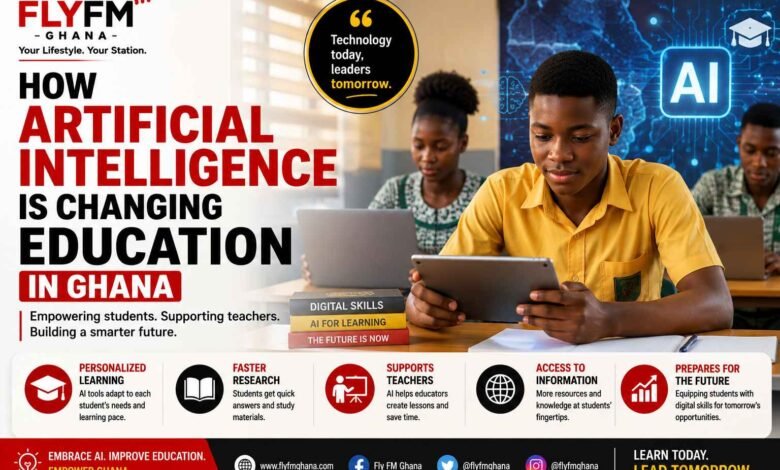
1. Personalized Learning
AI-powered learning platforms can recommend lessons based on a student’s strengths and weaknesses, allowing learners to study at their own pace.
2. Faster Research
Students can quickly find explanations, summaries and study materials, helping them understand complex topics more efficiently.
3. Language Support
AI translation tools make it easier for students to understand materials written in different languages.
4. Improved Teacher Productivity
Teachers can use AI to prepare lesson plans, quizzes and educational resources, giving them more time to focus on teaching.
5. Better Access to Information
Students in remote communities with internet access can benefit from educational resources that were previously difficult to obtain.
Challenges of AI in Education
Despite its benefits, AI also presents challenges:
- Some students may rely too heavily on AI instead of developing their own thinking skills.
- Not every school has reliable internet access.
- Digital literacy remains a challenge in some communities.
- AI-generated information should always be verified using trusted sources.
The Future of AI in Ghana
As internet access continues to improve, AI is expected to become more common in Ghanaian classrooms.
Educational institutions are also exploring ways to integrate digital skills into teaching to prepare students for future careers.
Students who learn how to use AI responsibly may gain valuable skills that will benefit them in higher education and the workplace.
Conclusion
Artificial Intelligence is changing education across the world, including Ghana. When used responsibly, AI can support learning, improve productivity and expand access to knowledge.
However, it should complement—not replace—critical thinking, creativity and independent learning.
FOLLOW US ON FACEBOOK