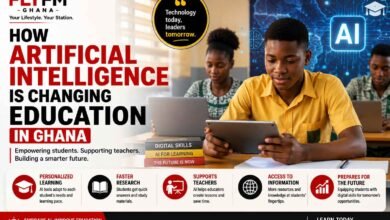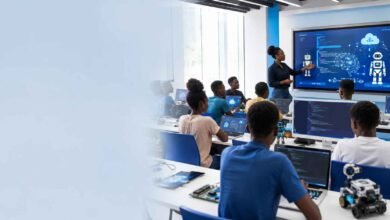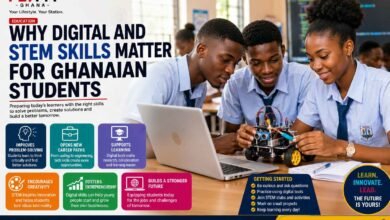
Education in Ghana is changing alongside the wider digital economy. Students now use phones, computers and online platforms for research, communication, learning resources and career preparation. Having access to technology is useful, but knowing how to use it responsibly and effectively is even more important.
Digital skills do not mean that every student must become a software developer. They include everyday abilities such as finding trustworthy information, writing professional messages, creating presentations, organising data, protecting accounts and using digital tools responsibly. These skills can support both academic work and future employment.
Why Digital Skills Matter for Students
Many workplaces now expect employees to communicate electronically, work with documents and understand basic digital systems. Students who practise these skills early can become more confident when they move into higher education, internships or employment.
Digital skills should complement traditional learning rather than replace it. Reading, writing, mathematics, critical thinking and communication remain important. Technology becomes more useful when students understand the subject they are studying and use digital tools to solve specific problems.
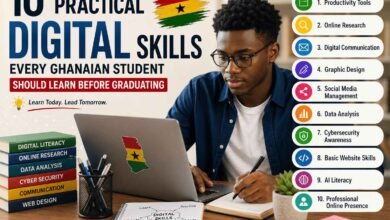
1. Learn Effective Online Research
Searching the internet is easy, but finding reliable information requires judgement. Students should learn how to compare information from different sources, check publication dates, identify the original publisher and distinguish evidence from opinion.
For school assignments, students should record where information came from rather than copying paragraphs from websites. Taking notes in their own words can improve understanding and reduce accidental plagiarism.
2. Improve Digital Writing and Communication
Email, messaging platforms and online forms are common in education and employment. Students can practise writing clear messages with a useful subject line, polite greeting, concise explanation and appropriate closing.
Professional communication also includes knowing when not to send a message. Sharing private information, forwarding unverified claims or writing abusive comments can create problems later. A strong digital reputation begins with responsible communication.
3. Understand Spreadsheets and Basic Data
Spreadsheet skills are useful across many careers. Students can start with simple tasks such as entering information into rows and columns, sorting data, calculating totals and creating basic charts.
Learning how formulas work can also improve financial literacy. A student might use a spreadsheet to track school expenses, savings goals or a small project budget. The same principles can later be applied in business, administration and research.
4. Learn Presentation Skills
Presentations are common in classrooms, universities and workplaces. Students should learn how to organise a presentation around a clear message rather than filling every slide with text.
Good presentation practice includes readable text, useful visuals, accurate information and confident explanation. The speaker should understand the material instead of simply reading slides word for word.
5. Build Basic Cybersecurity Awareness
Students should know how to protect their online accounts. Strong, unique passwords, multi-factor authentication where available and careful handling of suspicious links are basic security habits.
Students should also understand that legitimate organisations do not normally need a person to reveal passwords or verification codes through an unexpected message. If an account appears compromised, the safest response is to use the service’s official recovery process.
6. Use Artificial Intelligence Responsibly
AI tools can help students brainstorm, explain difficult concepts or practise questions, but students should understand their limitations. AI-generated information can contain errors, and submitting generated work as personal academic work may violate school rules.
A responsible approach is to use AI as a learning aid where permitted, verify important information and produce work that reflects the student’s own understanding. Schools and institutions may have different rules, so students should follow the requirements of their teachers and academic programmes.
Digital Skills and Career Preparation
Students can build a simple portfolio of genuine work as they learn. This might include a presentation, spreadsheet project, research assignment, design project or coding exercise. A portfolio can demonstrate practical ability more clearly than a list of software names.
Students should also practise collaboration. Digital projects often involve sharing files, receiving feedback and working toward deadlines. These habits are valuable in both education and employment.
How Parents and Teachers Can Help
Parents and teachers can support digital learning by encouraging curiosity while also teaching online safety. Students need room to explore technology, but they also need guidance about privacy, misinformation, cyberbullying and responsible sharing.
Where internet access is limited, students can still build many skills through offline practice. Writing documents, organising information, practising presentations and learning basic computer functions can create a foundation that becomes more useful as access improves.
Common Mistakes Students Should Avoid
One common mistake is assuming that information is true because it appears high in a search result. Another is copying material without understanding it. Students should also avoid sharing personal details publicly, using the same password everywhere or downloading unknown files.
Another mistake is focusing only on certificates. Certificates can be useful, but practical ability and the capacity to demonstrate what was learned are also important.
Frequently Asked Questions
What digital skills should students in Ghana learn first?
Useful starting points include online research, digital writing, spreadsheets, presentations, cybersecurity awareness and responsible use of AI tools.
Do digital skills replace traditional education?
No. Digital tools work best alongside reading, writing, mathematics, critical thinking, communication and subject knowledge.
Is it safe for students to use AI for schoolwork?
AI can be useful for learning when permitted, but students should verify information and follow the rules of their school or institution regarding AI-assisted work.
How can a student practise digital skills without expensive software?
Students can practise with free or school-provided office tools, browser-based learning resources and basic computer applications. The important part is building practical ability.
Why is cybersecurity important for students?
Students use accounts that may contain personal information, school records or financial details. Basic security habits can reduce the risk of account theft and scams.
Conclusion
Digital skills can give students practical advantages without changing the importance of strong academic foundations. Learning how to research, communicate, organise information, present ideas and protect online accounts can prepare young people for a world where digital tools are part of everyday education and work.
For more Ghana-focused education, news and useful information, visit FLY FM GHANA.