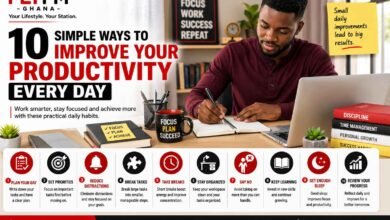
Modern life in Ghana can be busy. Work, school, family responsibilities, commuting, social activities and personal commitments can quickly fill a day. A simple routine can make everyday responsibilities easier to manage without turning life into a rigid schedule.
Good organisation is not about doing everything perfectly. It is about deciding what matters, preparing for predictable tasks and creating enough space for rest and unexpected events.
Start With the Essentials
A useful routine begins with the activities that cannot be ignored. Work or school commitments, meals, sleep, family responsibilities and important appointments should have a place in the day.
Once these essentials are clear, smaller tasks can be arranged around them. This approach can reduce the feeling that every task is equally urgent.
Plan the Next Day
Spending a few minutes in the evening reviewing the next day can make mornings easier. Check appointments, prepare necessary items and identify the most important tasks.
A short plan is often more useful than a long list. If a person has ten tasks but realistically has time for five, the plan should reflect reality rather than create unnecessary pressure.
Reduce Everyday Clutter
Physical clutter can make routine tasks harder. Keeping frequently used items in consistent places can save time. This can apply to documents, keys, work equipment, school materials and household supplies.
Digital clutter also matters. Organising important files, deleting unnecessary downloads and using clear folder names can make it easier to find information when needed.
Prepare Simple Meals
Meal planning can help households save time and make food choices more predictable. It does not require preparing an entire week’s meals in one day. Even deciding what to cook for the next two or three days can reduce last-minute decisions.
Households should choose foods that fit their budget, culture and nutritional needs. Where someone has a medical condition requiring a specific diet, individual professional advice should take priority.
Make Time for Movement
Movement can be included in ordinary routines. Walking for part of a journey, using stairs where appropriate, doing household tasks or setting aside time for exercise can all increase activity.
The best routine is one that can be maintained. A short activity performed consistently may be more realistic than an ambitious plan that quickly disappears.
Protect Rest and Personal Time
A schedule filled entirely with obligations can become difficult to maintain. Rest is part of a sustainable routine. People can create periods without work messages, unnecessary notifications or constant online activity.
Personal time can be simple: reading, listening to music, spending time with family, taking a walk or enjoying a hobby. The important point is to create space for recovery.
Use Technology Carefully
Calendars, reminders and note-taking apps can help people organise appointments and tasks. However, too many notifications can create distraction rather than productivity.
Choose a small number of tools and use them consistently. Important reminders should be easy to see, while unnecessary notifications can be reduced.
Review the Routine Weekly
A routine should change when circumstances change. Once a week, consider what worked, what created problems and what can be simplified. A new job, school timetable, family responsibility or change in commuting pattern may require a different approach.
Frequently Asked Questions
How can I start a better routine?
Start with essential commitments, regular sleep and the most important tasks. Add smaller habits gradually instead of changing everything at once.
Does a daily routine need to be strict?
No. A routine should provide structure while leaving room for unexpected events and personal needs.
Can meal planning save time?
Yes. Even a simple plan for several meals can reduce daily decision-making and make shopping more organised.
How can technology help with organisation?
Calendars, reminders and digital notes can help track appointments and tasks. They are most useful when they simplify rather than complicate a routine.
Conclusion
A more organised lifestyle in Ghana can begin with small decisions: plan essential tasks, prepare for tomorrow, reduce clutter, make time for movement and protect rest. The goal is not a perfect schedule but a practical routine that supports everyday responsibilities while leaving room for real life.
For more Ghana lifestyle and community stories, visit FLY FM GHANA.