How Renewable Energy Is Shaping Ghana’s Future.
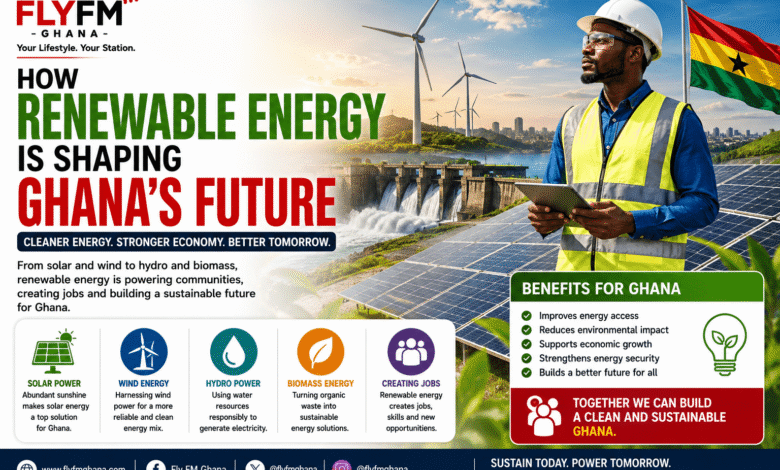
As the global demand for cleaner energy continues to grow, Ghana is steadily investing in renewable energy as part of its long-term development strategy. While hydroelectric power has supplied electricity for decades, the country is increasingly exploring solar, wind and biomass energy to diversify its power sources and improve energy security. Ghana’s energy policy supports expanding renewable energy and encouraging private-sector investment in the sector.
Renewable energy has the potential to reduce dependence on fossil fuels, create jobs, improve electricity access and contribute to environmental protection.
READ ALSO: How Climate Change Is Affecting Agriculture in Ghana
What Is Renewable Energy?
Renewable energy comes from natural sources that are replenished continuously. Unlike fossil fuels, these resources can be used repeatedly with lower greenhouse gas emissions.
Examples include:
- Solar energy
- Wind energy
- Hydroelectric power
- Biomass energy
- Ocean energy
Ghana has significant renewable energy potential, particularly in solar, hydro and biomass resources.
Why Renewable Energy Matters
1. Improving Energy Security
A diverse energy mix reduces dependence on a single source of electricity. Renewable energy can help strengthen Ghana’s electricity supply as demand continues to increase.
2. Supporting Rural Communities
Solar mini-grids and standalone solar systems can provide electricity to communities that are difficult to connect to the national grid.
Reliable electricity improves education, healthcare and business opportunities.
3. Creating Employment
The renewable energy sector creates jobs in:
- Solar panel installation
- Engineering
- Electrical maintenance
- Manufacturing
- Technical training
- Research and innovation
As the industry grows, more skilled professionals will be needed.
4. Protecting the Environment
Renewable energy generally produces fewer greenhouse gas emissions than fossil fuels.
Expanding clean energy can help reduce air pollution while supporting Ghana’s climate commitments.
Solar Energy Is Growing
Because Ghana receives abundant sunshine throughout the year, solar energy is considered one of the country’s most promising renewable resources.
Solar systems are increasingly being used for:
- Homes
- Schools
- Health centres
- Farms
- Businesses
- Street lighting
Government policies and private investment continue to support solar development.
Challenges Facing Renewable Energy
Despite the progress, several challenges remain:
- High initial installation costs.
- Limited public awareness.
- Financing constraints.
- Infrastructure and grid integration needs.
- Maintenance and technical capacity in some areas.
Addressing these issues will require cooperation between government, businesses and development partners.
What Individuals Can Do
Everyone can contribute to a cleaner energy future by:
- Conserving electricity.
- Using energy-efficient appliances.
- Supporting renewable energy solutions where practical.
- Learning more about sustainable energy.
Small actions across many households can collectively make a meaningful difference.
Looking Ahead
Ghana’s Renewable Energy Act and long-term renewable energy plans aim to encourage investment and increase the contribution of renewable energy to the country’s electricity mix. Continued innovation, improved infrastructure and public awareness will play important roles in achieving these goals.
Conclusion
Renewable energy is becoming an increasingly important part of Ghana’s future. As investment in solar, hydro and other clean energy technologies continues, the country has an opportunity to improve electricity access, strengthen the economy and support sustainable development.
By embracing renewable energy today, Ghana can build a cleaner, more resilient and energy-secure future for generations to come.
FOLLOW US ON FACEBOOK