How Climate Change Is Affecting Agriculture in Ghana
How Climate Change Is Affecting Agriculture in Ghana

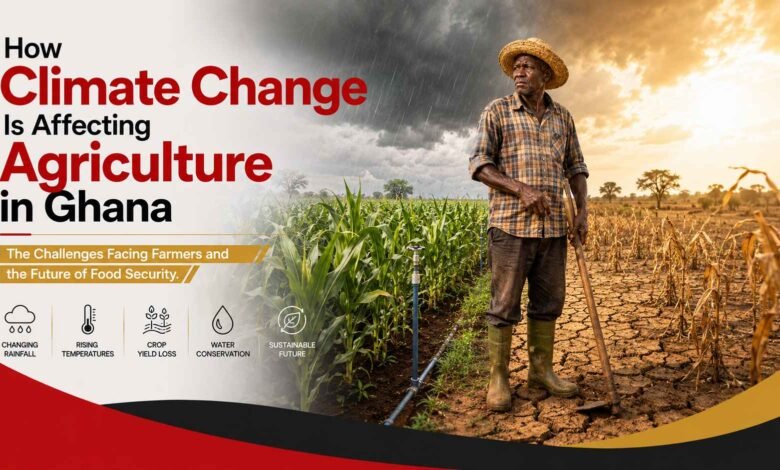
How Climate Change Is Affecting Agriculture in Ghana.
Agriculture remains one of Ghana’s most important economic sectors, providing employment for millions of people and contributing significantly to the country’s food supply. However, changing weather patterns linked to climate change are creating new challenges for farmers across the country.
From unpredictable rainfall to rising temperatures, many farming communities are adapting to conditions that are becoming increasingly difficult to predict.
What Is Climate Change?
Climate change refers to long-term changes in temperature and weather patterns. While these changes can occur naturally, scientists agree that human activities—such as burning fossil fuels and deforestation—have contributed significantly to recent global warming.
READ ALSO: How Online Radio Is Transforming Entertainment in Ghana
Effects on Ghanaian Agriculture
1. Unpredictable Rainfall
Many farmers depend on seasonal rains for planting. When rainfall starts late, ends early or becomes irregular, crop yields can be affected.
2. Higher Temperatures
Hotter weather increases water loss from the soil and can reduce crop productivity, particularly during prolonged dry periods.
3. Increased Pest and Disease Outbreaks
Changing weather conditions can encourage the spread of crop pests and plant diseases, making farming more challenging.
4. Reduced Water Availability
Some rivers, streams and reservoirs experience lower water levels during extended dry seasons, affecting irrigation and livestock farming.
5. Food Prices
Lower agricultural production can contribute to higher food prices, affecting both farmers and consumers.
How Farmers Are Adapting
Many farmers are adopting new practices to improve resilience, including:
- Planting drought-resistant crop varieties.
- Using irrigation where available.
- Practicing tree planting and agroforestry.
- Conserving soil moisture through better farming techniques.
- Diversifying crops to reduce risk.
What Individuals Can Do
Climate action is not limited to governments and farmers. Individuals can contribute by:
- Planting trees.
- Reducing waste.
- Conserving water.
- Avoiding bush burning.
- Supporting sustainable farming practices.
Looking Ahead
Government agencies, agricultural researchers and development partners continue to promote climate-smart agriculture to help farmers adapt to changing conditions.
With continued education, innovation and responsible environmental management, Ghana’s agricultural sector can become more resilient despite the challenges posed by climate change.
Completion
Climate change is affecting agriculture across Ghana, but practical solutions are available. Supporting farmers, protecting natural resources and promoting sustainable farming methods can help safeguard food security for future generations.
FOLLOW US ON FACEBOOK